


Telescope Master is reader-supported. As an Amazon Associate I earn from qualifying purchases. If you buy through links on our site, we may earn an affiliate commission at no extra cost to you. Full disclosure.
Don’t let complicated setups hold you back. Thoughtful accessories make it easy to capture planets and stars, helping your passion for astrophotography grow with each night under the sky.
In this guide, I’ll share some of the best astrophotography gear that can turn your astrophotography experience from confusing to exciting. Whether you need easy camera guides, adapters, or telescopes, these picks will make your journey smoother. Keep reading to find the gear that suits your needs and brings the night sky closer than ever before. When starting your journey into the world of astrophotography, it’s essential to have the right tools at your disposal. That’s why I recommend exploring the best astrophotography kits for beginners, which typically include user-friendly mounts, tripods, and beginner telescopes. These kits can provide everything you need to capture stunning images of celestial events, making it easier to focus on your creativity and technique.
Here are The 8 Best Astrophotography Accessories for Beginners in 2026
1. Ocqotat Photography Cheat Sheet For Dslr Camera Accessories

The OCQOTAT Photography Cheat Sheet is ideal for beginner photographers who are using DSLR cameras from brands like Canon, Nikon, or Sony. If you’re looking to quickly understand essential camera settings, exposure, modes, composition, and lighting without sifting through lengthy manuals, this compact quick reference card is perfect for you. It’s especially useful for those who want a handy guide while shooting on the go.
Pros:
- Compact size of 4×3 inches makes it easy to carry anywhere
- Comprehensive coverage of camera settings, exposure, modes, composition, and lighting
- Designed specifically for popular DSLR brands: Canon, Nikon, Sony
- Durable and lightweight, weighing only 0.2 pounds
- Quick reference format helps beginners learn and apply techniques efficiently
Cons:
- Limited depth of information may not satisfy advanced photographers
- Physical card format might wear out over time with frequent use
The OCQOTAT Photography Cheat Sheet acts as a quick guide that simplifies complex photography concepts into easy-to-understand points. Its compact design ensures that photographers can keep it in their camera bag or pocket, providing instant access to critical information about exposure settings, shooting modes, and composition rules. This makes it an excellent tool for beginners who need to make quick adjustments while capturing the perfect shot without interrupting their creative flow.
Additionally, the cheat sheet enhances learning by providing a structured overview of lighting techniques and camera settings tailored for DSLR users. By having this concise reference, users can improve their photography skills more rapidly and with greater confidence. The inclusion of brand-specific details for Canon, Nikon, and Sony cameras ensures that users get relevant and practical advice for their particular equipment, making this cheat sheet a valuable companion on every photography journey.
2. Dslr Cheat Sheet Photography Accessories
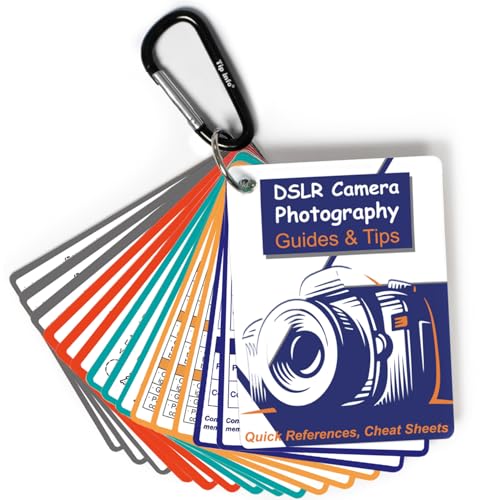
The DSLR Cheat Sheet Photography Accessories is perfect for both beginner and intermediate photographers who use Canon, Nikon, or Sony cameras. If you’re looking for a compact and handy guide to improve your photography skills, understand camera settings quickly, and enhance your shooting experience, this quick reference card is an ideal purchase. It is especially useful for photographers who want to master exposure modes, composition techniques, and other essential camera settings on the go.
Pros:
- Compact size (4×3 inches) makes it easy to carry and reference anytime.
- Includes comprehensive tips on exposure modes, composition, and camera settings.
- Compatible with major camera brands like Canon, Nikon, and Sony.
- Durable and designed for quick, practical use during photography sessions.
- Perfect as a thoughtful photography gift for enthusiasts.
Cons:
- Limited to reference only; does not replace detailed manuals or in-depth tutorials.
- Small text size may be difficult for some users to read in low-light conditions.
This DSLR Cheat Sheet is a thoughtfully designed quick reference guide that provides essential photography tips and camera settings at your fingertips. Its compact dimensions (Height: 0.1 inches, Width: 3 inches, Length: 4 inches) ensure that it fits comfortably in your camera bag or pocket, allowing you to access important information without interrupting your workflow. By offering clear guidance on settings like exposure, composition, and camera modes, it helps photographers make informed decisions quickly, enhancing the quality of their shots.
Whether you’re learning to navigate the complex settings of your DSLR or need a refresher during shoots, this cheat sheet serves as a valuable tool. The inclusion of tips and guides tailored for popular camera brands like Canon, Nikon, and Sony makes it versatile and practical. For those looking to gift a photography lover, this accessory combines utility and thoughtfulness in a compact, durable format that supports continuous learning and creativity behind the lens.
3. Astromania Upgrated Telescope Camera Adapter

The Astromania Upgraded Telescope Camera Adapter is ideal for astronomy enthusiasts and astrophotographers who want to enhance their imaging capabilities. Whether you are a beginner looking to capture clear celestial images or an experienced user aiming for precise focus with your refractors or reflector telescopes, this variable projection adapter offers versatility and ease of use. It is perfect for those who want to explore prime focus and eyepiece projection astrophotography without investing in multiple adapters.
Pros:
- Compatible with both prime focus and eyepiece projection astrophotography setups
- Includes a 1.25 inch extension tube kit for variable projection lengths
- Compact and lightweight design with dimensions of 2.4 x 2.4 x 5.1 inches
- Durable black finish that complements most telescope equipment
- Easy to install and adjust for precise focusing
Cons:
- May require additional adapters or accessories for certain camera models
- Not suitable for telescopes with non-standard eyepiece sizes
The Astromania Upgraded Telescope Camera Adapter stands out due to its versatility and adaptability. Its variable projection feature allows users to fine-tune the distance between the camera and telescope, enabling clearer and sharper astrophotography images. The inclusion of a 1.25 inch extension tube kit means that users can customize their setup for both prime focus and eyepiece projection methods, expanding the range of celestial objects that can be captured. This flexibility is especially beneficial for users who own multiple telescope types or want to experiment with different photographic techniques.
Furthermore, the adapter’s compact dimensions and sturdy build quality ensure that it integrates seamlessly with existing telescope gear without adding unnecessary bulk. The black finish not only provides a sleek aesthetic but also helps reduce glare during night-time imaging sessions. Overall, this adapter is a practical addition for anyone serious about improving their astrophotography, delivering both functionality and ease of use for capturing stunning images of the night sky.
4. The Astrophotography Manual

The Astrophotography Manual: A Practical and Scientific Approach to Deep Space Imaging is ideal for both amateur and professional astronomers who are passionate about capturing the wonders of the night sky. This comprehensive guide is perfect for individuals looking to deepen their understanding of astrophotography techniques and improve their skills in imaging deep space objects. Whether you are a beginner eager to learn or an experienced photographer aiming to refine your craft, this manual offers valuable insights and practical advice.
Pros:
- Provides a detailed, scientific approach to deep space imaging for improved photo quality.
- Comprehensive coverage of equipment setup, techniques, and post-processing tips.
- Authored by Focal Press, a reputable publisher in photographic literature.
- Compact dimensions (10.1 x 0.9 x 8.1 inches) and manageable weight (approximately 2.45 pounds) make it easy to carry.
- Includes 288 pages filled with in-depth content suitable for various skill levels.
Cons:
- First edition published in 2015, so some newer technologies might not be covered.
- May be too technical for casual hobbyists who prefer simpler guides.
This manual stands out by combining both practical advice and scientific explanations, helping users to not only capture stunning images but also understand the underlying principles of astrophotography. It guides readers through the entire process, from selecting the right equipment to mastering complex imaging techniques that reveal the beauty of deep space. The book’s clear instructions and detailed illustrations make it a valuable resource for anyone serious about astrophotography.
Additionally, the manual offers extensive tips on post-processing, which is crucial for enhancing the final images and bringing out the finest details of celestial objects. By following the methods outlined in this book, users can significantly improve their imaging results and develop a more methodical approach to their astrophotography projects. Its practical format and scientifically grounded content make it an indispensable tool for capturing the mysteries of the universe.
5. Svbony Sv105 Telescope Camera
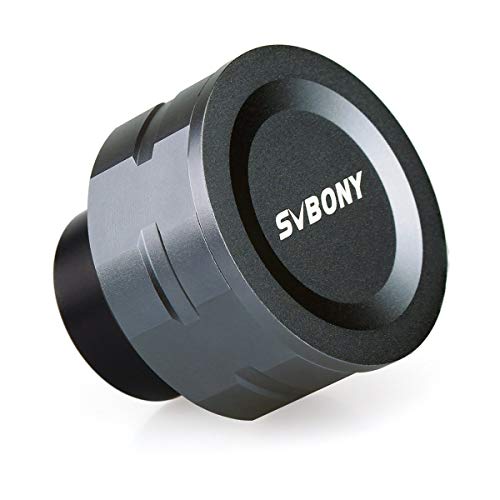
The SVBONY SV105 Telescope Camera is ideal for astrophotography beginners who want to capture stunning celestial images without the complexity of advanced equipment. This 1.25″ USB3.0 IMX307 CMOS color camera is perfect for hobbyists and amateur astronomers looking to enhance their telescope experience with digital imaging capabilities.
Pros:
- High-speed USB3.0 interface for fast image transfer
- IMX307 CMOS sensor providing clear and colorful astrophotography
- Compact and lightweight design (2.95 x 5.31 x 7.28 inches, 0.64 pounds) for easy handling
- Easy integration with most telescopes via the 1.25″ eyepiece mount
- Suitable for both planetary and deep-sky imaging
Cons:
- Limited advanced settings for professional users
- Requires compatible software for image capture and processing
- May need additional accessories for optimal performance
The SVBONY SV105 Telescope Camera features a high-quality IMX307 CMOS sensor which allows users to capture vivid and detailed images of celestial bodies. Its USB3.0 connectivity ensures rapid data transfer, minimizing lag and enabling smooth live viewing on connected devices. This makes it particularly useful for beginners who want real-time feedback while adjusting their telescope setup.
Designed with ease of use in mind, this electronic eyepiece fits seamlessly into the standard 1.25″ telescope mount. The camera’s lightweight and compact design makes it portable and convenient for night sky expeditions. Additionally, it supports a wide range of astrophotography applications, from capturing planets to deep-sky objects, providing users with versatile imaging capabilities without overwhelming complexity.
6. Svbony T2 T Ring Adapter And T Adapter
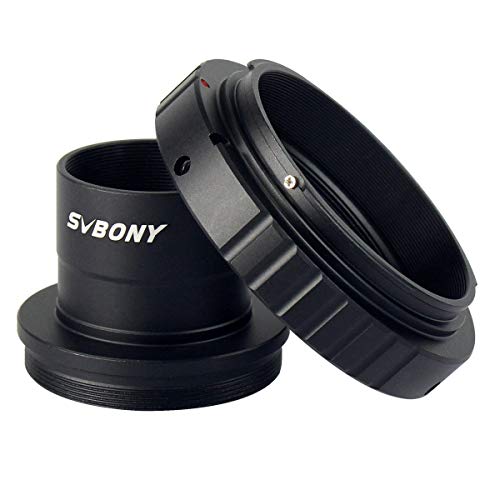
The SVBONY T2 T Ring Adapter and T Adapter is ideal for amateur and professional astronomers who want to connect their Canon EOS standard EF lenses to their telescopes for astrophotography. If you are looking to capture high-quality images of celestial objects using your DSLR camera and telescope, this metal adapter is designed to provide a secure and precise fit, making it perfect for astrophotography enthusiasts.
Pros:
- Made of durable metal for long-lasting use
- Compatible with Canon EOS standard EF lenses and most telescopes
- Standard 1.25 inches size fits easily with many telescope eyepieces
- Compact and lightweight design for easy handling and portability
- Provides stable and secure connection to prevent camera shake during long exposures
Cons:
- Limited to Canon EOS EF lenses, not compatible with other camera brands
- Requires some technical knowledge to properly attach and use with telescope setups
The SVBONY T2 T Ring Adapter features a precise metal construction that ensures durability and a reliable connection between your DSLR camera and telescope. Its compatibility with Canon EOS standard EF lenses allows users to take advantage of high-quality camera optics for stunning astrophotography results. The adapter’s standard 1.25-inch size makes it versatile and easy to use with a wide range of telescopes, enhancing the overall imaging experience.
By securely connecting the camera to the telescope, this adapter minimizes vibrations and camera shake, which is critical for capturing sharp images during long exposure astrophotography. Its compact dimensions (Height: 1.36 inches, Width: 5.85 inches, Length: 7.02 inches) make it convenient to carry and integrate into your existing astronomy gear without adding unnecessary bulk. Overall, the SVBONY T2 T Ring Adapter is a valuable accessory for anyone serious about elevating their astrophotography capabilities.
7. Svbony Sv305c Astrophotography Camera

The SVBONY SV305C Astrophotography Camera is ideal for amateur astronomers and astrophotography enthusiasts looking to capture detailed images of planets and the moon. If you want a reliable and easy-to-use camera that integrates seamlessly with your telescope for enhanced celestial imaging, this camera is a great choice. Its compatibility with electronic telescope eyepieces makes it perfect for those seeking to elevate their night sky observations.
Pros:
- Equipped with a high-resolution 2.1MP IMX662 color sensor for clear, vibrant images.
- Includes a removable UV IR cut glass that improves image clarity and color accuracy.
- Designed with a 1.25″ electronic telescope eyepiece for easy attachment to most telescopes.
- Compact and lightweight gray design that fits comfortably into your telescope setup.
- Perfect for planetary and moon astrophotography as well as electronic assisted astronomy (EAA).
Cons:
- May require some technical knowledge to maximize camera settings and software integration.
- The physical dimensions may be larger than some other compact astrophotography cameras.
- Limited to 2.1MP resolution, which might not satisfy professional-level astrophotographers.
The SVBONY SV305C Camera stands out with its advanced IMX662 color sensor, offering users a significant upgrade in image quality compared to standard webcams or older astrophotography cameras. The inclusion of removable UV IR cut glass helps filter unwanted wavelengths, resulting in sharper and more natural images of celestial bodies. This feature ensures that every shot captures the true colors and fine details of planets and the moon, enhancing your overall viewing experience.
Its design as a 1.25″ electronic telescope eyepiece ensures broad compatibility with a variety of telescopes, making it easy to integrate into existing setups. The camera’s user-friendly form factor and lightweight build minimize additional bulk, allowing for comfortable handling during extended observation sessions. Whether you are capturing still images or live video feeds for EAA, the SVBONY SV305C offers reliable performance and quality results for hobbyists and budding astrophotographers alike.
8. Gskyer Telescope

The Gskyer Telescope with a 70mm aperture and 400mm focal length is an ideal choice for kids and beginners who are eager to explore the night sky. Its user-friendly design and included accessories make it perfect for young astronomy enthusiasts or anyone just starting their journey into stargazing. Whether you want a portable option for travel or a simple setup for backyard observations, this telescope offers great value and ease of use.
Pros:
- Compact and lightweight design weighing only 5.7 pounds, ideal for travel and easy handling.
- Includes a sturdy AZ mount which allows smooth and precise movement for tracking celestial objects.
- Comes with a phone adapter and wireless remote for capturing clear photos and videos of the night sky.
- Includes a convenient carry bag, making transport and storage effortless.
- 70mm aperture provides bright, clear images suitable for viewing the moon, planets, and stars.
Cons:
- Limited magnification compared to more advanced telescopes may restrict detailed deep-sky observations.
- Refracting design can sometimes show slight chromatic aberration on very bright objects.
- Manual azimuth mount requires some practice for smooth tracking of fast-moving objects.
The Gskyer Telescope features a 70mm aperture refractor lens that gathers ample light for vivid views of lunar craters, Jupiter’s moons, and Saturn’s rings, making it an excellent educational tool. The 400mm focal length combined with the AZ mount allows users to easily adjust their view and track objects across the sky without complex setup procedures. Its portability and included accessories such as the phone adapter and wireless remote enhance the user experience, allowing beginners to document their discoveries effortlessly.
Additionally, the telescope’s compact size and lightweight frame ensure it can be quickly transported to dark sky locations or stored conveniently when not in use. The included carry bag adds to the ease of travel, making it suitable for family outings or educational field trips. Overall, the Gskyer 70mm Telescope balances performance and convenience, offering a fun and accessible way for beginners to develop a deeper interest in astronomy.
Frequently Asked Questions
What Dslr Accessories Help Beginners In Astrophotography?
DSLR cheat sheets guide settings like exposure, modes, and composition. They simplify complex camera functions for beginners. These accessories boost confidence and improve photo quality.
How Does The Astromania Telescope Camera Adapter Work?
It fits 1. 25-inch telescopes for prime focus and eyepiece projection imaging. This adapter links DSLR cameras to telescopes easily. It ensures sharp astrophotography shots with refractors or reflectors.
Which Svbony Camera Suits Beginner Astrophotographers Best?
The SVBONY SV105 offers USB3. 0 connection and IMX307 sensor ideal for beginners. It delivers clear, color images and fits standard 1. 25″ eyepieces. It’s user-friendly and perfect for planetary and deep sky shots.
Why Use A T Ring And T Adapter In Astrophotography?
T rings connect Canon EOS lenses to telescopes, enabling DSLR imaging. The metal T adapter fits 1. 25″ telescope eyepieces. This combo ensures stable, accurate camera alignment for sharp astrophotos.
What Features Make Gskyer 70mm Telescope Beginner-friendly?
It has a 70mm aperture and 400mm focal length, ideal for beginners. The AZ mount is easy to use and stable. It includes a phone adapter, wireless remote, and carry bag for convenience.
How Does “the Astrophotography Manual” Aid Beginners?
It offers practical, scientific guidance on deep space imaging techniques. The manual covers equipment setup, camera settings, and image processing. It helps beginners master astrophotography step-by-step with clear instructions.
Conclusion
Choosing the right astrophotography accessories can make your stargazing experience more enjoyable and productive. Tools like the OCQOTAT DSLR cheat sheet help beginners quickly learn camera settings and techniques. Telescope adapters, such as the Astromania and SVBONY T2, connect your camera for clearer, sharper images.
Cameras like the SVBONY SV105 and SV305C offer easy ways to capture deep space and planetary photos. A beginner-friendly telescope, like the Gskyer 70mm, provides a great start with simple setup and portability. Combining these accessories lets you explore the night sky with confidence.
Start small, learn step by step, and improve your skills over time. Remember, patience and practice are key to capturing stunning astrophotography images. With the right gear, your journey into space photography will be both fun and rewarding. Keep experimenting and enjoy the stars!